
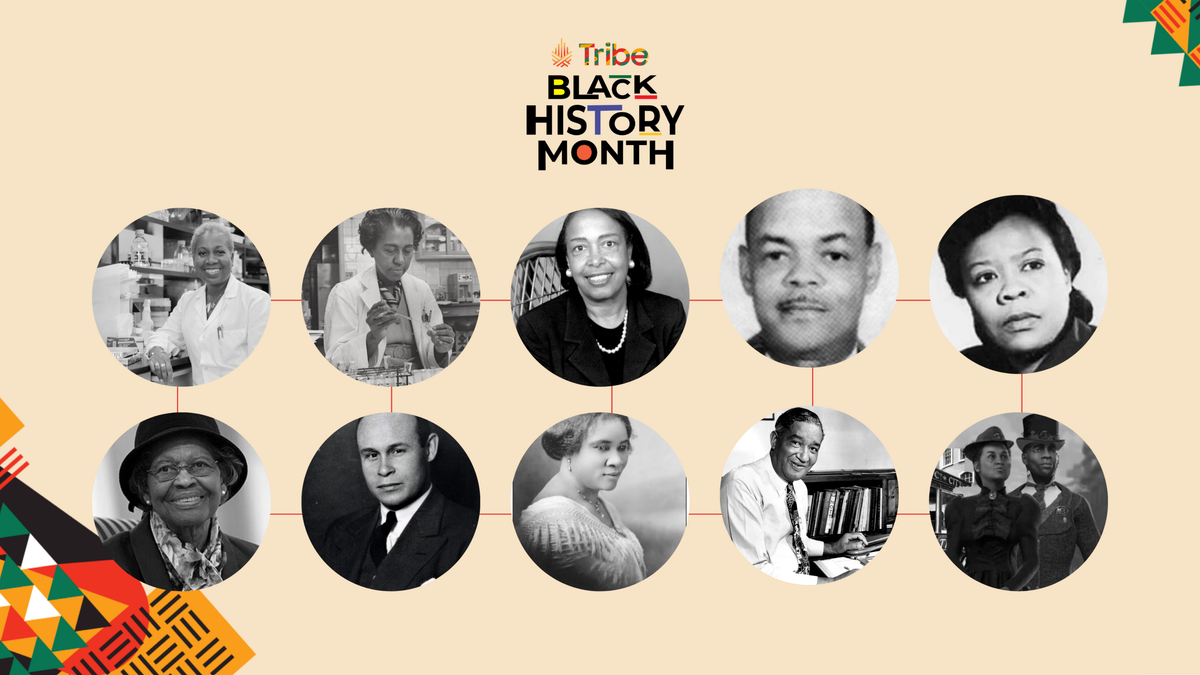
Most people learn Black history through a familiar lens — civil rights leaders, historic “firsts,” and moments of protest, resistance, and breakthrough. Those stories matter. But they’re not the whole story.
Black brilliance didn’t just push against injustice, it built the systems the modern world quietly depends on. Not only in music, sports, or the arts, but in technology, infrastructure, medicine, business, and public life.
Here’s a stat that rarely makes it into classrooms: during the United States’ most influential period of innovation, Black inventors were responsible for nearly 50,000 patents, more than almost every immigrant group of the same era.
If you stripped Black innovation out of daily life, your world wouldn’t just feel different. It would stop working.
This is the part of Black history we don’t talk about enough: the invisible infrastructure. The foundations so deeply embedded into everyday life that we’ve stopped noticing they had builders at all.
In this post, we explore Black history through the systems that quietly shape everyday life, from the digital tools we rely on to the physical, biological, and economic infrastructure that holds the modern world together.
Let’s get into it.
Digital Bedrock: How Black Innovators Built the Systems We Now Treat as Neutral
The internet. Smartphones. Search, maps, video calls.
We often talk about the digital world as if it appeared fully formed, as though these tools were inevitable. But none of this is neutral, and none of it was automatic. The systems that power modern life work because someone designed them to.
Making Information Navigable
Start with something you use dozens of times a day: search.
Before Google existed, the internet was a chaotic collection of files with no clear way in. Finding information required knowing exactly where to look. That changed when Alan Emtage, working at McGill University, created ARCHIE — the world’s first search engine.

His breakthrough wasn’t flashy. It was foundational. Emtage didn’t create content; he made information findable. That single shift transformed the internet from a static library into something navigable, usable, and human.
Every time you open a browser and expect a relevant answer, you’re relying on a system that assumes information can be located quickly and reliably. That assumption had to be built.
Turning Navigation into Trust
The same is true for navigation.
Most of us don’t “get directions” anymore. We delegate navigation entirely, trusting our phones with our time, our safety, and our bodies. That trust exists because of Gladys West, whose mathematical modeling of the Earth made modern GPS possible.
Her work turned location from guesswork into precision at a planetary scale. When your phone calmly reroutes you around traffic or guides you through a city you’ve never visited, it feels effortless. That effortlessness is engineered.
When Systems Work, They Disappear
Once systems work well enough, they fade into the background.
We don’t think about how our voice reaches someone across the world, why our audio is clear, or why our devices don’t randomly fail. But those assumptions rest on Black innovation.
Voice over IP technology — the foundation of Zoom, WhatsApp, and FaceTime — was developed by Marian Croak. The microphones inside nearly every modern device, from sound and recording equipment and telephones, to hearing aids and children's toys, trace back to work co-invented by James West. And the stability of everyday electronics was improved by Otis Boykin, whose work made modern technology reliable at scale.
These contributions don’t announce themselves. They simply work.
Imagine your morning without search or GPS… You can’t quickly find a coffee shop, trust your route, or assume your call will connect cleanly. What you feel immediately isn’t inconvenience — it’s friction. A reminder that modern digital life rests on layers of infrastructure most of us didn’t build ourselves.
Physical World: How Black Innovators Engineered Safety, Comfort, and Scale
We rarely think about the systems that keep daily life running smoothly.
Buildings are warm. Elevators feel safe. Food shows up fresh. Cities function.
That ease is designed.
Modern life depends on physical systems that solve messy, unglamorous problems — temperature control, transportation, safety, storage... Many of those solutions trace back to Black innovators who focused less on recognition and more on making everyday life work better.
Making Abundance Possible
Start with food and medicine.
The ability to eat fresh produce in winter or transport life-saving vaccines across long distances depends on refrigeration at scale. That system exists because Frederick McKinley Jones developed portable refrigeration units for trucks, trains, and ships.
His work didn’t just improve logistics. It made modern supply chains possible. Cities could grow. Medicine could travel. Perishability became negotiable.
Cold, it turns out, is one of civilization’s quiet foundations.
Turning Comfort into a System
The same kind of thinking reshaped how we live indoors.
Before central heating, warmth was room-by-room and unreliable. Buildings weren’t designed for comfort — comfort took effort. That changed when Alice Parker patented a natural gas–fuelled central heating system that distributed heat through ducts.
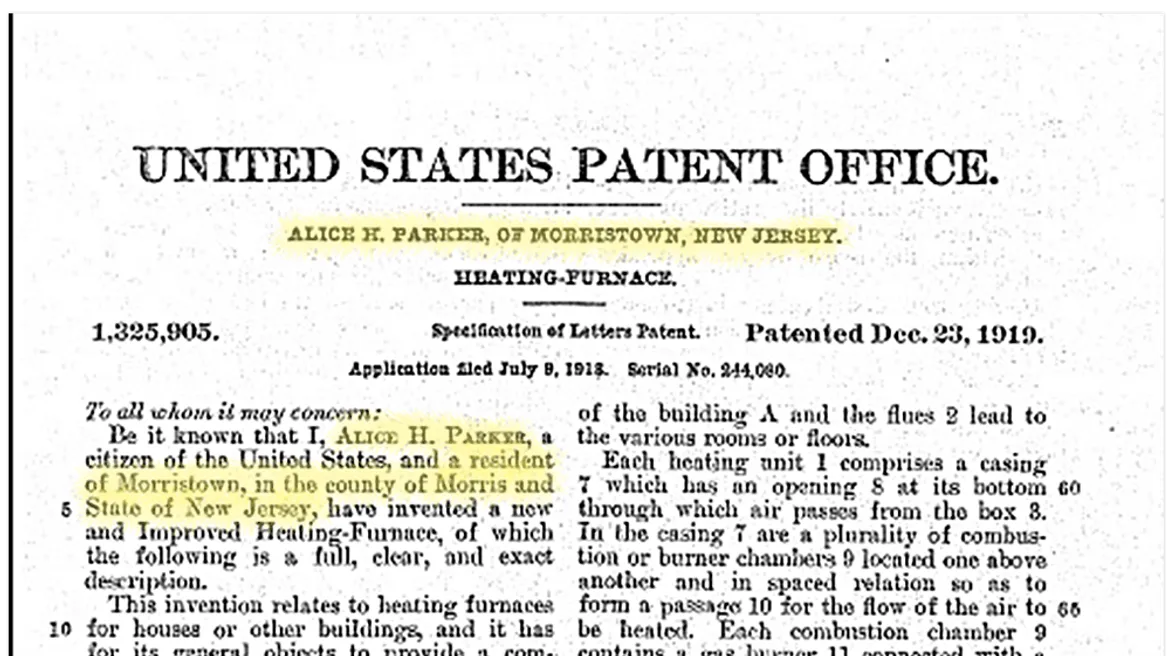
Her contribution wasn’t just technical. It was architectural. She helped turn warmth into a system rather than a struggle, shaping how homes and cities would be built going forward.
Designing for Safety at Scale
As cities grew upward and outward, new risks followed.
The safety of modern elevators rests on mechanisms developed by Alexander Miles, who created automatic doors that prevent people from falling down open shafts. The security systems we now associate with smart homes and doorbells trace back to Marie Van Brittan Brown, who designed the first video home security system with two-way communication and remote monitoring.
Even the safety of first responders traces back to similar early innovations. Garrett Morgan developed an early gas mask to protect firefighters and rescue workers from toxic smoke, helping establish standards for emergency response.
None of these inventions were flashy. All of them became essential.
Transportation as Infrastructure — and Liberation
In Canada, the physical world was shaped not only by invention, but by entrepreneurship.
In the 1830s, Thornton and Lucie Blackburn established Toronto’s first taxi service after escaping slavery in the United States. Their business didn’t just move people through the city; it generated wealth that helped fund freedom for others arriving via the Underground Railroad.

Transportation, in this context, wasn’t just about mobility. It was infrastructure for economic independence.
What ties these contributions together isn’t novelty. It’s scale. These innovators solved problems most of us only notice when they fail — and their solutions became the baseline for modern life.
Biological Standard: How Black Scientists Shaped the Protocols That Decide Survival
Modern medicine often gets framed as a series of breakthroughs. But what actually saves lives, day after day, are standards — the protocols that determine how quickly care is delivered, who receives it, and whether treatment works at scale.
Those standards didn’t emerge by accident. Many of them were built by Black scientists whose work quietly reshaped how healthcare functions for everyone.
Making Emergency Care Possible
Every hospital relies on blood banks. Every emergency room assumes blood will be available within minutes, not hours. That global system exists because Charles Drew developed the methods for processing, storing, and transporting blood plasma safely at scale.
Before Drew’s work, blood was fragile and local. After it, blood became a dependable resource — tested, preserved, and ready when lives were on the line. His contributions didn’t just improve outcomes; they made modern emergency medicine possible.
Speed, in this context, isn’t convenient. It’s survival.
Turning Precision into Care
Medical progress doesn’t only happen in emergencies. It also happens in moments that restore quality of life.
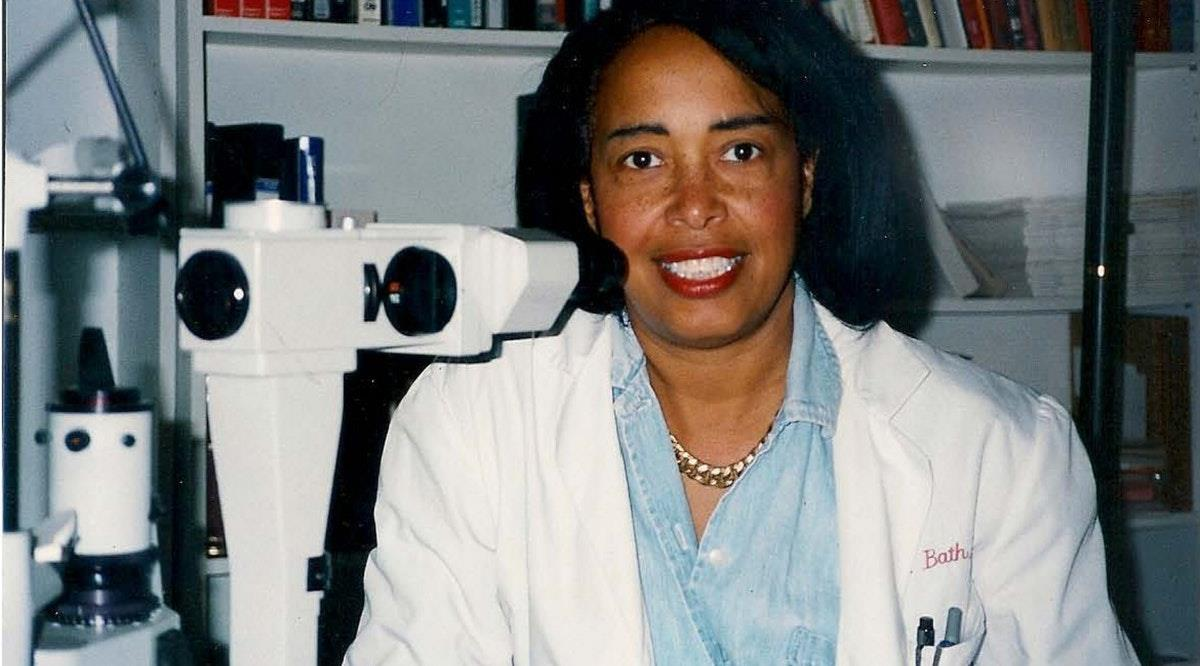
That’s where Patricia Bath comes in. Her invention of the laserphaco probe transformed cataract treatment, allowing surgeons to dissolve cataracts with precision and restore sight through a faster, less invasive procedure.
Blindness went from an inevitability to a treatable condition. Millions of people regained their vision because someone designed medicine to be more precise — and more humane.
When Equity Improves the System
Some of the most important advances in healthcare happen when scientists notice what the system overlooks.
Researchers like Marie Maynard Daly helped establish the link between cholesterol and heart disease, shaping modern prevention. Marilyn Hughes Gaston proved the effectiveness of early treatment for sickle cell disease, leading to universal newborn screening protocols. More recently, Juliet Daniel identified genetic mechanisms that help explain why certain cancers behave more aggressively in Black women, enabling more targeted care.
These contributions weren’t about advocacy alone. They were about accuracy. Medicine became better when it accounted for more bodies, more data, and more realities.
Taken together, these innovations reveal a consistent pattern. Black scientists didn’t just advance medicine; they expanded who medicine was designed to serve, and in doing so, improved it for everyone.
Economic & Social Blueprint: How Black Leaders Built Power When Access Was Denied
We often talk about justice as something demanded — protested for, legislated, granted. But alongside those efforts, another kind of work has always been happening in parallel.
Black leaders have been building systems.
When access to capital, media, or institutions was restricted, they didn’t wait for permission. They created markets, organizations, and platforms strong enough to endure and, eventually, to set new standards.
Building Markets That Couldn’t Be Ignored
“I had to make my own living and my own opportunity. But I made it! Don’t sit down and wait for the opportunities to come. Get up and make them!”
Long before “inclusive business” entered the mainstream, Madam C. J. Walker built a manufacturing and distribution empire that proved Black consumers, workers, and entrepreneurs formed a viable economy.
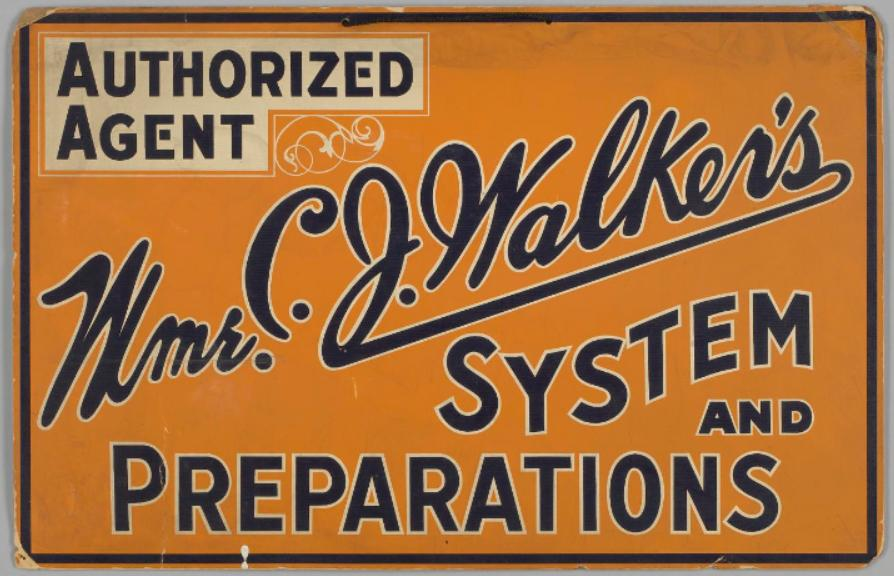
Her success wasn’t symbolic. It was structural. She created jobs, supply chains, training programs, and national reach at a scale that forced recognition. Economic legitimacy didn’t come from being invited in; it came from building something too substantial to overlook.
That blueprint echoed north of the border decades later, when Beverly Mascoll scaled Mascoll Beauty Supply into a multi-million-dollar national business. You can learn more about this Nova Scotian-born entrepreneur, in this video by Junior Achievement:
Shaping the Social Contract
Markets aren’t the only systems that determine power. Narratives do, too.
In the 19th century, Mary Ann Shadd understood that long before laws could change, ideas had to circulate. By publishing The Provincial Freeman, she helped establish advocacy journalism as a democratic tool — one that informed, mobilized, and legitimized voices that were otherwise excluded.
That same instinct showed up in the legal profession, where Violet King navigated an exclusionary system to advance civil and human rights cases. These efforts weren’t just about protest. They were about building durable frameworks that governed how society functioned.
The Blueprint, Still at Work
That pattern hasn’t disappeared.
Today, leaders like Wes Hall are reshaping corporate governance through initiatives that set measurable standards for leadership representation, while entrepreneurs such as Alfred Burgesson and Isaac Olowolafe Jr. are addressing systemic funding gaps by building institutions designed to scale Black-led businesses globally.
Different era. Same approach.
When systems fail to distribute opportunity fairly, Black leaders build new ones — and grow them until they become unavoidable.
A New Curriculum for Excellence
Search. Navigation. Heating. Food. Emergency care. Markets. Media.
These systems didn’t evolve on their own. They were designed. And many of the ones we rely on most were shaped by Black brilliance so foundational that it blended into the background.
That invisibility isn’t a failure of contribution. It’s evidence of success.
Once a system works well enough, it stops being questioned. It becomes the baseline. It becomes normal. And in that normalization, authorship often disappears.
Black History Month offers a moment to pause that process — not by revisiting what’s already familiar, but by paying attention to what’s quietly held everything together all along.
That perspective matters everywhere, but it matters especially here.
In Canada, Black communities have long been builders of businesses, institutions, infrastructure, and ideas that shaped the country we live in today. Often without fanfare. Often without credit. But with lasting impact.
The takeaway isn’t just historical. It’s directional.
When you recognize that Black brilliance has always been capable of building what lasts, it changes how you see the present — and what you believe is possible next.
The work, then, isn’t about remembering harder.
It’s about noticing more clearly.
Because once you see the invisible infrastructure around you, it becomes impossible to unsee who built it.